
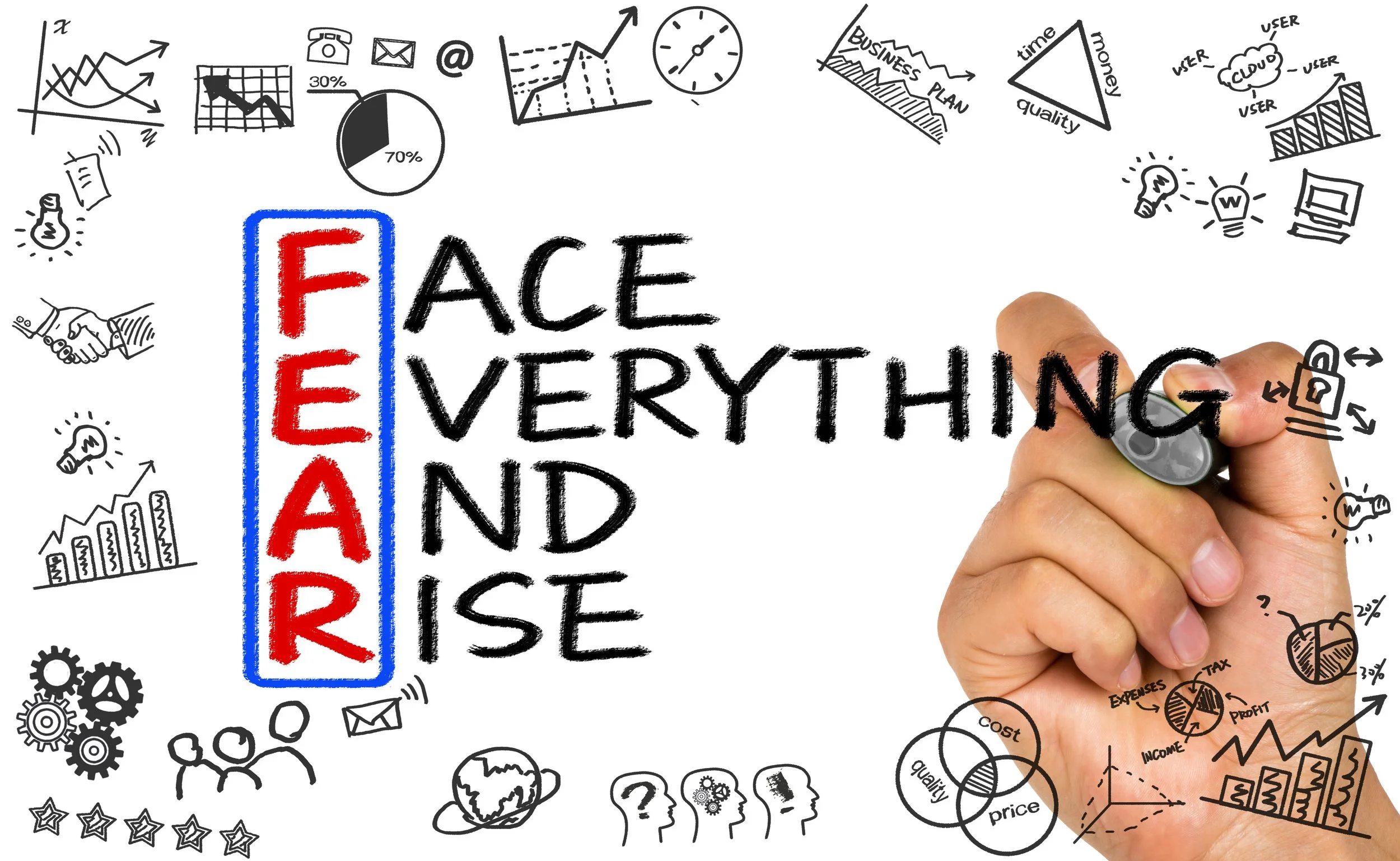
FEAR is a toothless bulldog. It's all in your mind.
In my last post, we examined how perspective shapes how we handle uncertainty. In the same vein, fear arises from our perception of the magnitude of a problem. This is not to say that perspective influences all fears. Some fears are genuine and aim to protect us from actual danger.
Fear is one of those words that is loosely used and can connote different things, from perception to an interpretation of an event. Mainly, fear is used to describe how we feel about situations, thoughts, or people. In this post, I'd like to explore fear as an emotion, a response, and a perspective.
First, fear as an emotion.
Fear is the way we feel when we encounter something or an event that our brain signifies as harmful. Sometimes this appraisal is accurate; at other times, fear stems from a subjective bias, often an interpretation shaped by experience. Ultimately, fear as an emotion may stem from how we have trained our minds to react to certain events.
Second, fear as a response.
Fear is our body's response to hormonal release, working to keep us safe in the face of perceived danger. Interestingly, the typical reaction to either freeze, fight, or flee is determined by our perception of the magnitude of the mind's perceived impending danger. Let me put it succinctly: the fear we exhume is directly linked to our perception and our interpretation of it.
Third, fear as a perspective.
Perspective is everything. It is the way we interpret what we see. And sometimes, fear is our interpretation of a situation shaped by our mindset or worldview. This means that not all events we perceive as harmful are. It may just be how we have conditioned our minds to view them.
But wait, what if fear isn’t a signal to stop, but an invitation to shift our perspective?
The fear we feel during transition stems from our inability to control the transition process or its outcome. As humans, we become uncomfortable with situations beyond our control, which often leads to worry, agitation, and ultimately, fear.
Let’s pause and think about the last time we hesitated to take a bold step: was it truly dangerous, or was it our minds magnifying uncertainty?
The fact is that we fear what we can't control. But here's the good news: we have the power to change our perspective.
To overcome this fear, we need to do two things:
Shift our view of transition by seeing it as a journey of growth, not uncertainty. This shift in perspective can make us feel more empowered and in control.
Define a clear vision. A clear vision immediately removes vagueness and creates hope by making us see and giving the mind something to work with. A clear vision calms fear.
In conclusion, describing fear as an emotion, a response, or a perspective is hinged on one thing: our mindset.
It's time we changed the way we think about transitions. It’s time we begin to see transitions as journeys towards clearly defined visions rather than vague destinations.
Our fear of transitions is more imagined than real. We only need to have a vision to guide us through it.
To new chapters and bold transitions,
Tolu Rogers, Ph.D.
Career & Life Transition Coach | Helping you navigate transitions with clarity, confidence, and purpose.